Evidencing Informed Consent for Surgical Extraction: Applying Montgomery in Dental Litigation
The Montgomery Standard in Oral Surgery
In contemporary dental medico-legal practice, the assessment of informed consent for surgical procedures has transitioned from the historic professional-standard test to a patient-centred disclosure model. This shift, fundamentally established by the ruling in Montgomery v Lanarkshire Health Board [2015], requires that a clinician discloses all material risks to a patient, and any alternative treatment options. The test is whether a reasonable person in the patient’s position would be likely to attach significance to the risk, or the clinician is, or should reasonably be, aware that the particular patient would be likely to attach significance to it. This assessment must be evidenced through contemporary records, which are frequently the subject of forensic analysis when matters proceed to litigation.
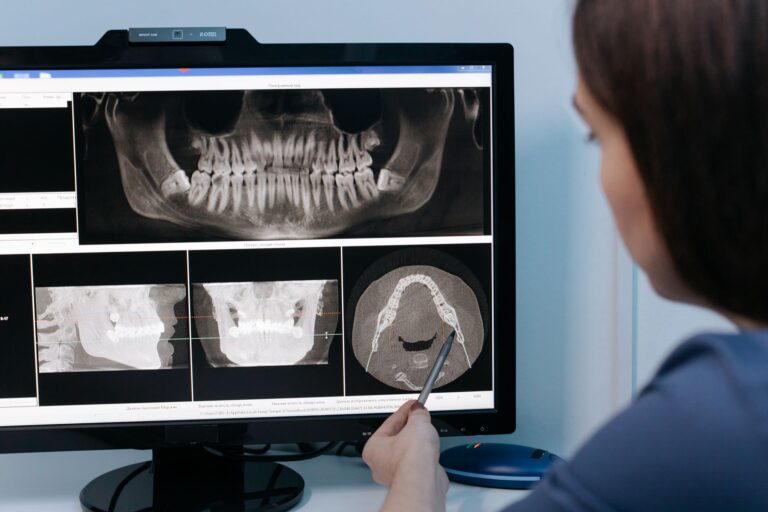
When reviewing case files, an expert witness must scrutinise clinical records for evidence of a dialogue regarding risks. Common risks requiring specific disclosure during surgical extractions include damage to adjacent teeth, post-operative infection, dry socket, and for lower molars, the risk of altered sensation due to nerve proximity. A forensic analysis of dental evidence may involve checking for radiographic justification of the procedure, including the use of CBCT when the relationship between the tooth roots and the inferior alveolar canal appears complex.
Documentation and Evidence Gaps
The primary pitfall in litigation often involves an absence of documentation. An evidential weakness is a consent form that lists generic risks but lacks evidence of a tailored discussion specific to the patient’s anatomy or clinical presentation. It is often argued in litigation that providing a generic leaflet is insufficient if the patient has specific anatomical considerations, such as a high risk of oro-antral communication or a particularly difficult access requiring bone removal.
Expert opinion frequently centres on whether the disclosure was sufficient. If the records fail to demonstrate that the patient was informed of a specific, material risk that later materialised, the claimant may argue that they would not have proceeded with the surgery at that time, or would have sought an alternative. The expert witness must provide a balanced view, not merely on the quality of the record-keeping, but on the clinical context of the procedure itself.
Causation and the Informed Consent Nexus
Establishing a breach of duty in consent is distinct from proving causation. Even if an expert determines that a dentist failed to provide adequate information, the claimant must still prove that this failure caused the loss or injury. In the context of Chester v Afshar [2004], the analysis of whether a failure to warn about a recognised risk results in liability remains a complex area of law. Experts are often instructed to provide the court with an assessment of the patient’s clinical situation at the time of the consent process, involving a review of pre-operative radiographs to determine if the clinician identified the risk markers.
Solicitors should be aware that claiming damages for a poor surgical outcome requires a rigorous analysis of whether the patient would have acted differently had the information been provided. In many dental cases, the clinical necessity of the extraction may render the argument that the patient ‘would not have proceeded’ difficult to maintain; each case must be assessed on its unique facts.
Instructing the Expert Witness
The selection of an expert witness is paramount to the credibility of the evidence. Where the primary issue relates to surgical technique or the assessment of risk in third molar removal, an oral and maxillofacial surgeon is typically appropriate. When the issues touch upon broader dental treatment planning, a dentist with experience in the specific area of practice is often required.
- Records and Radiographs: Ensure that all clinical notes, correspondence, and pre-operative radiographs are available for review.
- Questioning the Breach: Pose questions under CPR Part 35.6 to address the standard of care and the process of risk disclosure.
- Expert Discussions: Under CPR 35.12, the court may direct experts to discuss issues and prepare a joint statement to narrow the areas of disagreement. Note that a single joint expert is instructed under CPR 35.8 and does not participate in a joint statement process with another party-appointed expert.
- Prognosis: Seek an expert report that provides a clear condition and prognosis section, identifying future dental care needs, which should be assessed independently of liability.
Ultimately, the role of the expert is to assist the court by providing objective, impartial evidence, complying with the overriding duty under CPR 35.3. By focusing on the evidence of the dialogue between clinician and patient, rather than assuming a clinical failure implies a breach of consent, solicitors can ensure the robust testing of the claim.
This article is for general informational purposes only and does not constitute legal or medical advice. Readers should seek appropriate professional guidance.