Condition
Endodontic failure expert reports
Independent opinion on whether a failed root canal was a recognised complication or a departure from the standard of care.
Breach of duty
What the standard dentist is judged against
Root canal treatment can fail despite competent care. The adverse outcome is the starting point for the expert’s analysis, not proof of negligence.
The opinion addresses whether the diagnosis, treatment planning, technique, radiographic assessment and follow-up met the standard of a reasonably competent practitioner undertaking that procedure.
Consent is considered separately. The records should show the material risks and reasonable alternatives discussed with the patient, and that consent remained valid as treatment progressed.
Clinical evidence
How endodontic failure happens
Missed anatomy
An untreated canal may permit infection to persist. The expert considers whether the anatomy should reasonably have been identified and managed.
Preparation and obturation
Short, over-extended, poorly condensed or voided root fillings are assessed against the records, radiographs and the effect on disinfection and sealing.
Perforation
An unintended perforation may be created through the chamber or root wall. Its significance depends on location, management and the resulting prognosis.
Instrument separation
A fractured file is a recognised procedural complication. The opinion addresses avoidability, management, disclosure and whether it prevented adequate treatment.
Radiographic assessment
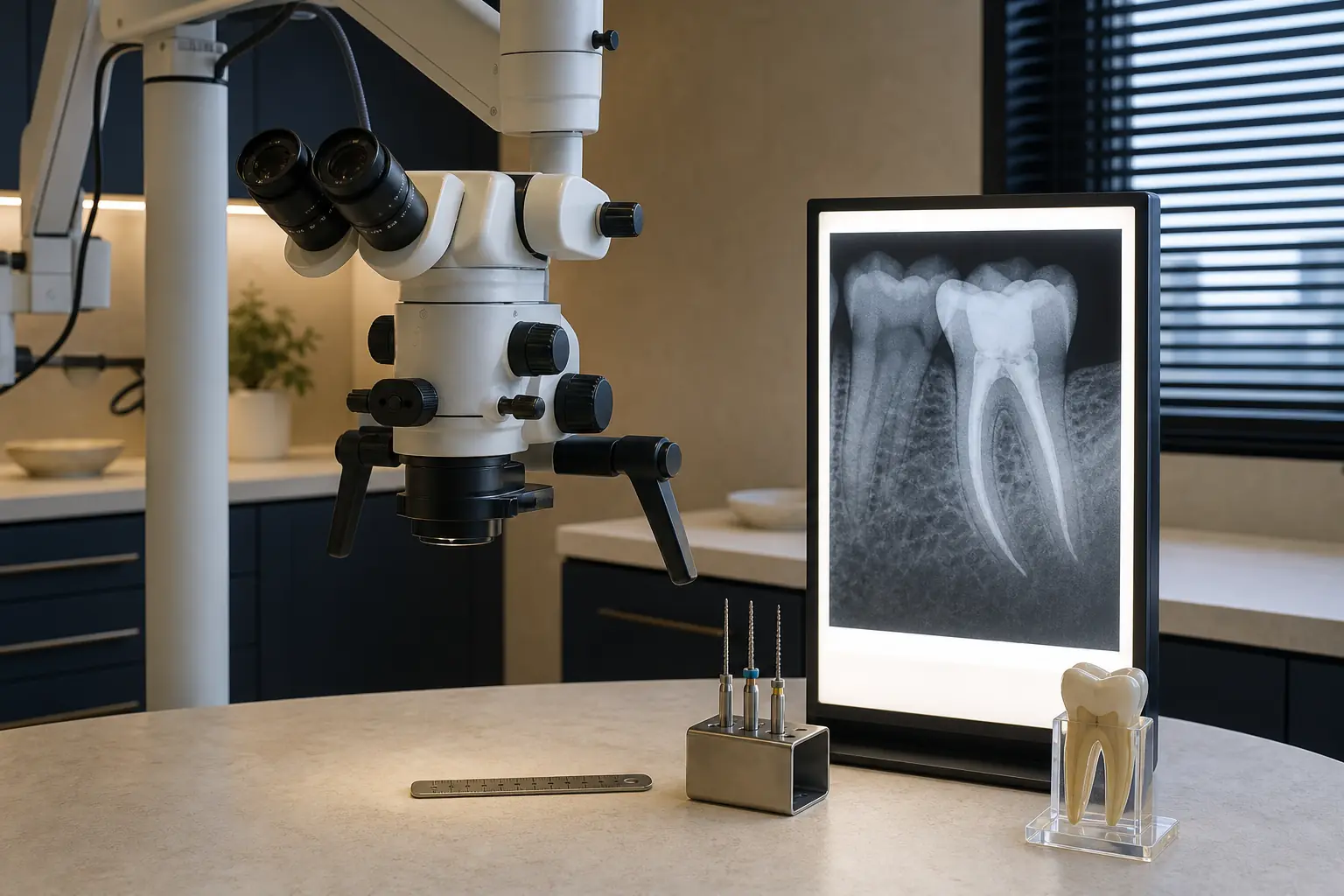
The expert reviews the pre-operative image, working-length evidence where relevant and the post-operative image used to assess the completed root filling.
Case complexity and referral
Curvature, obstruction, previous treatment and procedural complications may increase complexity. The question is whether the clinician was competent to proceed or should have referred.
The counterfactual
Causation and where the claim fails
Many teeth requiring root canal treatment are already compromised by caries, fracture, previous restorations, periodontal disease or established infection. The expert must define that baseline prognosis before attributing the eventual outcome to the treatment.
If the tooth would probably have required the same retreatment or extraction with competent care, the technical criticism may not establish recoverable loss.
A separated instrument or perforation may cause no additional injury where it is appropriately managed and monitored. Failure to disclose a complication can raise separate questions about consent, records and whether delayed remedial care caused further harm.
-
01
What was the baseline prognosis?
The pre-treatment condition and restorability of the tooth.
-
02
What would competent care have achieved?
The probable outcome under the appropriate treatment pathway.
-
03
What additional loss followed?
Retreatment, extraction or other consequences attributable to the breach.
Discipline-led matching
The expert we match
Specialist in endodontics
Often appropriate where complex endodontic technique, retreatment, procedural damage or specialist-level management is in issue.
General dental practitioner
May be appropriate where the central question concerns ordinary primary-care treatment, case assessment or whether referral should have been made.
Where the instruction crosses those boundaries, we identify the required disciplines before you instruct and provide the proposed CV.
Expert evidence
The report you receive
Why solicitors instruct us
Scope the evidence before commissioning the full opinion.
-
01
Screen the merits
A failed root canal is not a claim on its own. A proportionate initial review can identify whether the records support a defensible breach and causation case.
-
02
Match the relevant expertise
We distinguish specialist endodontic technique from the standard and referral decisions arising in general dental practice.
-
03
Keep one case-management contact
A named case manager coordinates the instruction, proposed CV and agreed report scope.
FAQs
Commonly asked questions
Not merely because it failed. Liability requires treatment below the applicable standard and additional loss caused by that failure.
Not necessarily. Instrument separation is a recognised complication. The expert considers avoidability, management, disclosure and whether it caused additional harm.
The complete clinical record and the available pre-operative, working and post-operative radiographic images, together with referral, consent and subsequent treatment records relevant to the tooth.
That is material to baseline prognosis and causation. The expert distinguishes the tooth’s pre-existing vulnerability from any additional loss attributable to the treatment.
Discuss an instruction