Condition
Dental nerve injury expert reports
Independent opinion on nerve injury after extraction, implant placement or local anaesthesia — and on whether the risk was ever explained.
Breach of duty
How a nerve injury claim is evidenced
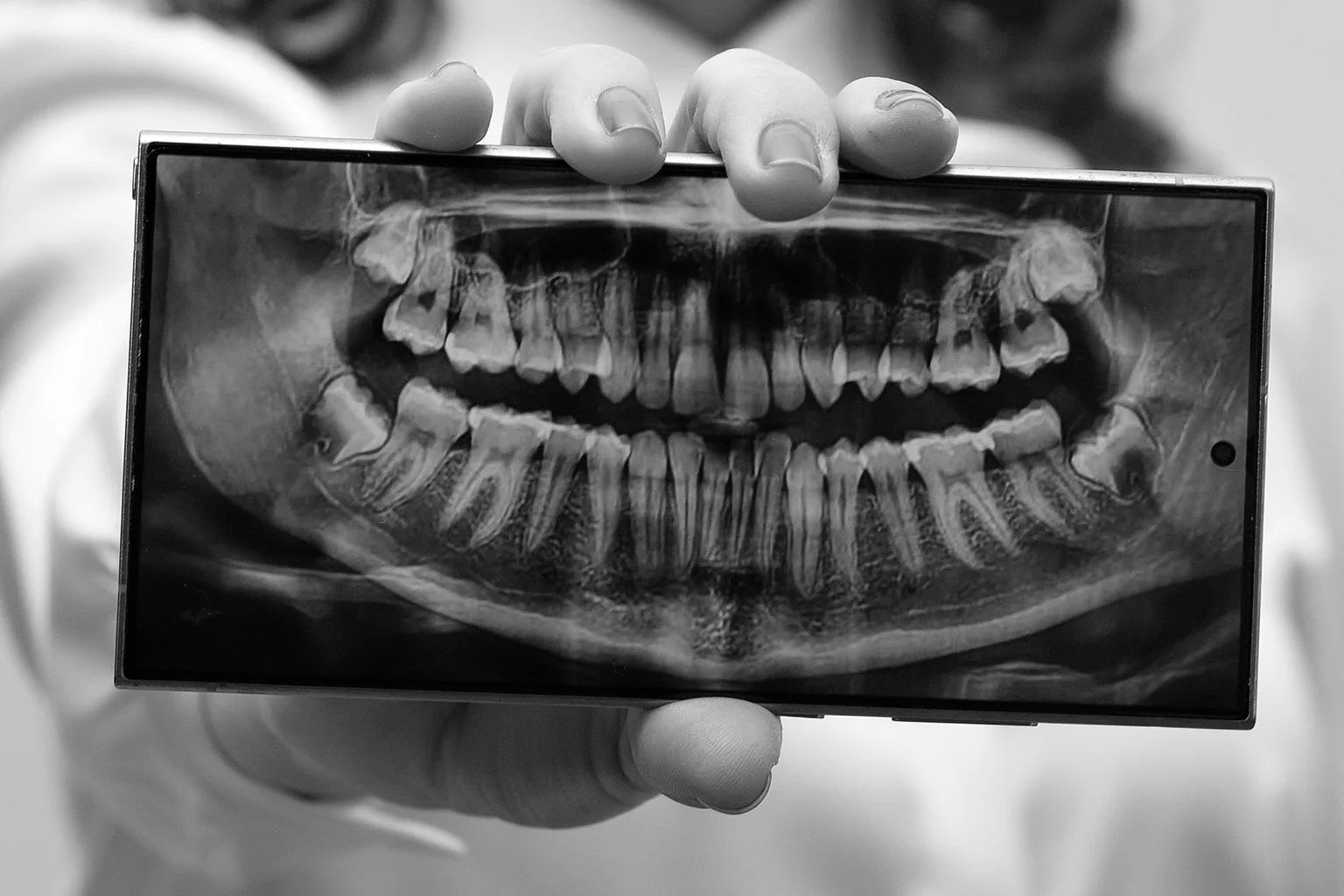
Nerve injury is a recognised risk of lower wisdom tooth removal and of implant placement in the posterior mandible.
Since Montgomery v Lanarkshire Health Board [2015] UKSC 11, a clinician must take reasonable care to ensure the patient is aware of material risks in the recommended treatment and of any reasonable alternative. A risk is material if a reasonable person in the patient’s position would attach significance to it.
Permanent altered sensation of the lip or tongue is exactly such a risk, and a signature on a consent form does not discharge the duty.
Clinical evidence
What causes it
No warning of the risk
Nothing in the notes about altered sensation.
No alternative offered
Coronectomy or leaving the tooth in situ never discussed.
Inadequate pre-operative imaging
Proximity of the nerve to the roots not assessed where the radiograph indicated it should be.
Technique
Excessive force, poor flap design, or an implant placed beyond the planned depth.
Local anaesthetic injury
Direct injury from an inferior alveolar nerve block.
No follow-up
Persisting numbness not reviewed or referred.
The counterfactual
Causation and the consent route
Where technique is in issue, causation is conventional: would competent surgery have avoided the injury?
Where consent is in issue, causation runs through the claimant. The question is what they would have done had the risk been explained. A claimant who would have proceeded anyway recovers nothing. This is why the expert’s role is to establish that the risk was material and should have been discussed, and to identify the reasonable alternatives that existed — the rest is a matter for the court.
The report should also address permanence. Neurapraxia commonly resolves; transection does not. Prognosis drives the value.
-
01
Was the risk material?
Whether a reasonable patient would attach significance to it, and the reasonable alternatives that existed.
-
02
Did the technique meet the standard?
Where technique is in issue, whether competent surgery would have avoided the injury.
-
03
Is the deficit permanent?
Neurapraxia commonly resolves; transection does not, and the prognosis drives the value.
Discipline-led matching
The expert we match
Oral and maxillofacial or oral surgery
Depending on where the treatment was carried out and who performed it — the extraction, the flap and the technique.
Clinician with implant experience
Where the injury followed placement of an implant in the posterior mandible.
Where the instruction crosses those boundaries, we identify the required disciplines before you instruct and provide the proposed CV.
Expert evidence
Commonly written reports
Why solicitors instruct us
Clinical service made for court proceedings
-
01
Experts for each case
We match an expert who understands what Montgomery requires of the discussion, not only what the surgery required.
-
02
Independent opinions
An expert who can say whether the deficit will resolve is worth more to the claim than one who can only describe it.
-
03
One point of contact
A named case manager coordinates the instruction, the proposed CV and the agreed report scope, and tells you where it stands before you ask.
FAQs
Commonly asked questions
Not in itself. It is a recognised risk. The claim usually turns on whether the risk was explained and whether an alternative was offered.
No. The Supreme Court in Montgomery made clear that a signature does not discharge the duty to discuss material risks.
Often, where the nerve is bruised rather than severed. The report addresses prognosis rather than assuming recovery.
Removing the crown of a tooth and deliberately leaving the roots, to avoid the nerve. It is a recognised alternative that should be discussed where it is reasonable.
Discuss an instruction