Evidence of Future Treatment Needs in Root Canal Failure

In dental clinical negligence litigation, the quantification of future treatment costs often rests upon the technical quality of primary endodontic therapy and the prognosis for long-term retention of the affected tooth. Where a claimant alleges failure of a root canal procedure, the instructing solicitor must secure robust expert evidence that distinguishes between clinical failure caused by a breach of duty and failure attributable to the inherent limitations of biological repair or the progression of underlying pathology.
Clinical Documentation and Radiographic Assessment
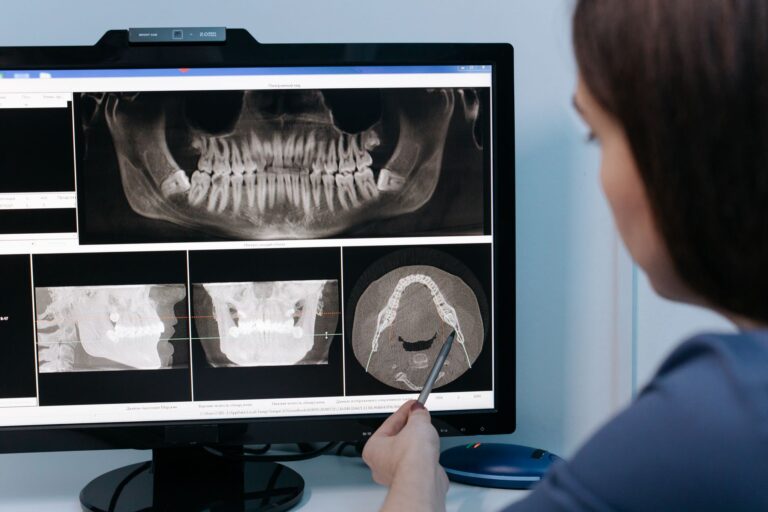
An expert report concerning endodontic failure requires a review of contemporary records. The assessment of technical success is often derived from the radiographic appearance of the root filling, specifically the presence of apical voids, the quality of coronal seal, and the maintenance of the original canal anatomy. Evidence of iatrogenic damage, such as ledging, canal transportation, or procedural perforations, may be cited as a deviation from the expected standard of care. Conversely, the presence of persistent apical periodontitis does not, of itself, constitute evidence of negligence, as treatment success rates in endodontics are subject to biological variability.
The clinician reviewing these records must correlate radiographic findings with clinical symptoms documented at the time. A failure to perform or interpret relevant radiographs, such as pre-operative imaging to assess canal morphology, or intra-operative radiographs to confirm working length, may form the basis of a breach of duty. Experts should scrutinise whether the treating dentist appropriately assessed the restorability of the tooth before embarking on complex endodontic intervention, as the long-term prognosis is frequently compromised by a poor coronal seal rather than the endodontic fill itself.
Addressing Breach and Causation
The expert witness must navigate the distinction between a sub-optimal treatment plan and an outcome that falls below the standard of care as defined in Bolam v Friern Hospital Management Committee [1957] and Bolitho v City and Hackney Health Authority [1998]. Even where a breach is identified, the claimant must prove that, but for the identified negligence, the tooth would have been saved. If the tooth possessed a poor pre-operative prognosis, or if it was affected by advanced periodontal disease which requires assessment by an experienced periodontist to determine the viability of long-term retention, the claim for future treatment costs may be adjusted.
Causation involves questions regarding the loss of a chance to save the tooth. In instances where an instrument has separated within the canal, the expert must determine whether the separation occurred as a result of unreasonable technique or whether it represented a known, non-negligent risk of the procedure, provided the claimant was appropriately warned in accordance with the principles set out in Montgomery v Lanarkshire Health Board [2015].
Common Pitfalls in Expert Instruction
A frequent error in dental litigation is the instruction of an expert whose clinical background does not align with the specific endodontic issue. While general dental practitioners may provide insight into routine care, claims involving complex retreatment or multi-rooted teeth often benefit from an opinion provided by an endodontic specialist. Aligning the discipline of the expert with the specific clinical issue is essential to ensure that the court receives evidence that is relevant and proportionate under CPR Part 35.1.
Solicitors should avoid over-relying on the visual appearance of a radiograph as a standalone indicator of negligent treatment. Radiographic interpretation is subject to intra-observer and inter-observer variability. An expert should provide a reasoned assessment based on the available clinical notes, consent documentation, and radiographic evidence to substantiate why a particular intervention failed or why retreatment is necessary. It is important that the expert maintains independence, as required by CPR 35.3, and does not stray into advocating for the instructing party.
Procedural Considerations for Solicitors
When preparing instructions, solicitors should ensure the expert has a complete, chronological set of clinical records, including all radiographs and CBCT scans. The expert should be specifically asked to address the following areas:
- The clinical standard of care applicable at the time of the initial endodontic treatment.
- Whether the failure of the root canal was a foreseeable consequence of the specific procedure or the natural course of the underlying dental disease.
- The specific future treatment requirements, such as specialist retreatment, the placement of a post and core, and a new coronal restoration, including the associated costs and success rates.
- The likely long-term prognosis of the tooth following the recommended intervention, distinguishing this from the prognosis had the initial treatment been performed to a reasonable standard.
Where there is a dispute regarding the standard of care or the necessity of future treatment, CPR 35.12 provides a mechanism for experts of like discipline to discuss their opinions and attempt to narrow the issues. This process, which results in a joint statement, is a tool for assisting the court. Where a single joint expert is appointed under CPR 35.7, they are instructed in accordance with CPR 35.8. If an expert finds it necessary to seek clarification on the court’s direction regarding the scope of their analysis, CPR 35.14 allows for a formal request for directions.
This article is for general informational purposes only and does not constitute legal or medical advice. Readers should seek appropriate professional guidance.