Applying Bolam and Bolitho to Implant Placement Errors

The Bolam and Bolitho Framework in Dental Casework
In clinical negligence litigation, the determination of whether a dentist has breached the standard of care during the provision of dental implants necessitates an application of the tests established in Bolam v Friern Hospital Management Committee [1957] and Bolitho v City and Hackney Health Authority [1998]. For instructing solicitors and legal teams, understanding how these tests interact with the technical nuances of implant dentistry is essential for assessing the merits of a claim and instructing an appropriately qualified dental implant surgeon.
The Bolam test establishes that a practitioner is not negligent if they act in accordance with a practice accepted as proper by a responsible body of clinical opinion. In dental implant disputes, this requires the court to identify a peer group that supports the specific technique or decision made by the defendant. The Bolitho decision added a caveat: the court is not bound to accept a body of opinion as responsible if that opinion does not withstand logical analysis or lacks a sound clinical foundation. In implant placement, this allows the court to scrutinise the clinical decision-making process against anatomical or physiological constraints, such as proximity to the inferior alveolar nerve or the assessment of available bone volume. Medical Expert Chambers’s guidance on dental implant surgeon examines the same instruction questions in more depth.
Clinical Considerations for Assessing Breach of Duty
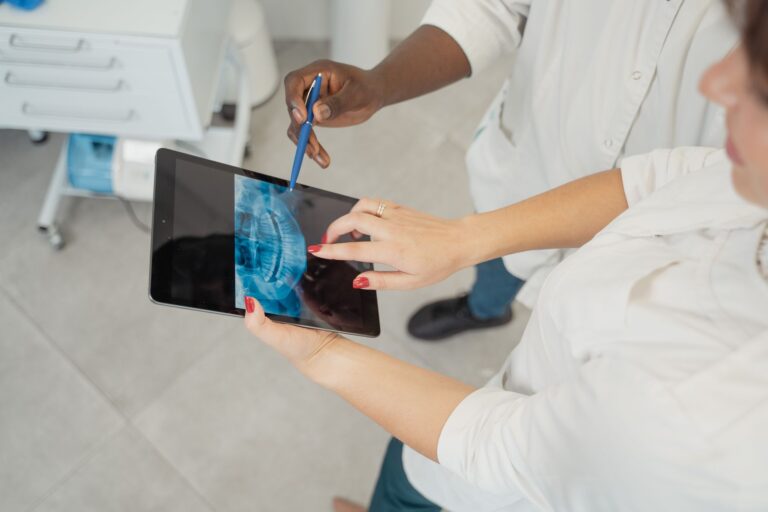
Expert evidence in implant claims often centres on the adequacy of pre-operative planning. The evaluation of bone quality, volume, and proximity to vital structures is fundamental. Allegations of negligence frequently arise where a claimant contends that specific imaging, such as Cone Beam Computed Tomography (CBCT), should have been utilised to supplement two-dimensional radiographs for safe implant positioning.
When assessing breach, the expert should consider several elements:
- Informed consent: Adherence to the standards set out in Montgomery v Lanarkshire Health Board [2015] regarding the disclosure of material risks, such as nerve injury or implant failure.
- Radiographic assessment: The adequacy of the planning process in identifying distances between the implant site and vital structures.
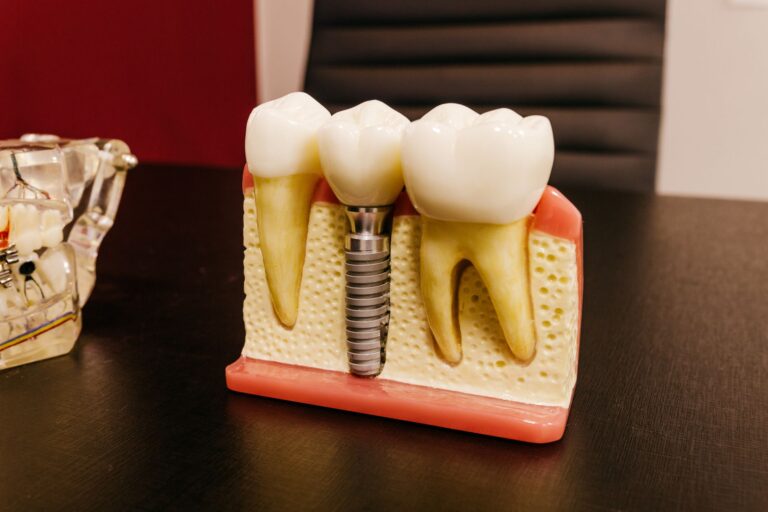
- Surgical execution: The assessment of primary stability, the selection of implant dimensions relative to host bone, and soft tissue management.
- Prosthetic design: The influence of implant angulation and depth on the final restoration and long-term mechanical stability.
An adverse clinical outcome, such as the loss of an implant or post-operative numbness, does not, in itself, constitute a breach of duty. The expert witness must differentiate between a recognised complication of the procedure and a failure to meet the standard of care.
Distinguishing Breach from Causation
A frequent error in initial case assessment is the failure to distinguish between breach and causation. Even if a practitioner failed to perform a specific scan, the claimant must establish that this omission resulted in a clinical error that actually caused the injury. If the implant would have been placed in the same position regardless of the imaging, or if the injury arose due to unpredictable anatomical variables, the claim may face challenges regarding causation.
When instructing an expert, it is helpful to pose specific questions focused on the counterfactual. Experts should identify what the reasonable standard of care was at the time of treatment and whether a deviation from that standard significantly contributed to the harm suffered. In complex matters, the court may direct experts to participate in discussions under CPR Part 35.12 to identify areas of agreement and disagreement in a joint statement. Where a single joint expert is appointed, they are instructed under CPR Part 35.8 to provide an independent report to the court.
Instructing the Correct Discipline
The success of a claim often depends on the alignment between the expert’s specific experience and the clinical issue. Cases involving complex bone grafting, sinus elevation, or neurosensory disturbance may require an oral and maxillofacial surgeon or a dentist with advanced post-graduate qualifications in restorative dentistry. Practitioners should ensure the expert has recent, relevant experience in the specific procedure under scrutiny.
Legal teams should obtain all relevant clinical records, including contemporaneous notes, consent forms, radiographic imaging, and laboratory communications. The expert should be invited to comment on the adequacy of these records against the General Dental Council standards for record-keeping. When addressing prognosis or future care, the expert provides a structured assessment of clinical needs, though the valuation of damages remains within the purview of the legal team.
This article is for general informational purposes only and does not constitute legal or medical advice. Readers should seek appropriate professional guidance.