Evidential Gaps in Implant Dentistry: Justification of the Treatment Plan

In clinical negligence proceedings, the assessment of implant dentistry often hinges on the robust justification of the treatment plan. Claims frequently arise when outcomes diverge from expectations, necessitating a meticulous review of the decision-making process. For instructing solicitors and their appointed experts, the focus remains on whether the pre-operative planning and clinical justification were consistent with the expected standard of care at the time of treatment.
Clinical Context and Diagnostic Requirements
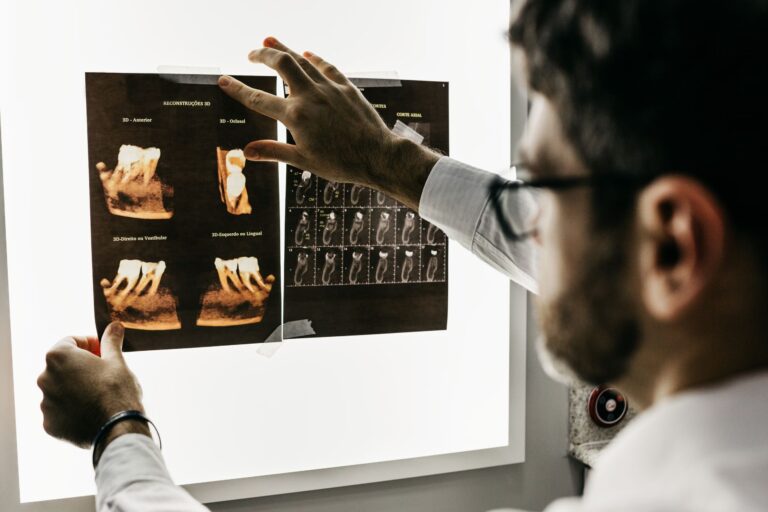
The foundation of any implant-supported restoration lies in the initial diagnostic phase. This involves an assessment of bone quality and quantity, the status of adjacent dentition, and the patient’s systemic health, including factors such as smoking status and glycaemic control. Modern practice often incorporates pre-operative imaging to evaluate anatomical landmarks, such as the inferior alveolar nerve or the proximity to the maxillary sinus. The decision to utilise specific imaging modalities is a matter of clinical judgement; however, the rationale for the chosen diagnostic path should be clearly documented. An absence of recorded justification for the chosen imaging protocol can create evidential gaps when the court is asked to assess the adequacy of the planning phase.
When assessing a case, the primary objective is to determine whether the practitioner performed a comprehensive clinical baseline assessment. This includes documenting the periodontal status of the remaining dentition. If an expert identifies that underlying pathology was managed or overlooked, the causal link to subsequent implant complications becomes a critical point of contention for the court.
The Role of the Expert Witness
The appointment of an appropriate expert is essential. For complex rehabilitations involving occlusal changes or multi-unit bridges, it is often necessary to involve a suitably qualified restorative dentist to evaluate the prosthetic design and its impact on the long-term prognosis. This discipline is distinct from the surgical element. While the surgeon may be responsible for the placement and primary stability of the implant, the restorative clinician typically bears responsibility for the loading protocol, the design of the crown or bridge, and the management of occlusal forces.
Expert evidence under CPR Part 35 must focus on the breach of duty and the subsequent causation of loss. The expert must avoid speculating on the practitioner’s internal thoughts, relying instead upon contemporary records. Where records are sparse, or where the clinical justification for a specific surgical technique is absent, the expert must consider whether a reasonably competent practitioner would have documented these details. The expert’s overriding duty to the court, as set out in CPR 35.3, necessitates that they provide an objective, unbiased opinion based on the evidence available.
Common Pitfalls in Documentation
Evidential gaps often manifest in the consent process. Under the principles set out in Montgomery v Lanarkshire Health Board [2015], the practitioner is required to discuss material risks with the patient. In implant dentistry, these include, but are not limited to, nerve injury, failure of osseointegration, and the long-term risk of peri-implant disease. If the notes do not reflect a discussion of these risks, or if the patient’s specific expectations were not recorded, the court may explore whether the patient would have proceeded with the treatment had they been properly informed.
Another common area of dispute involves the assessment of bone volume and the decision to perform or omit bone grafting procedures. An expert witness must scrutinise the clinical notes and surgical planning tools to determine if the decision was justified by the clinical findings. If there is a disparity between the planned treatment and the surgical reality, the rationale for any departure should be evident in the notes. Without this evidence, it may be difficult to establish that the treatment met the standard of care.
Practical Guidance for Instruction
- Secure all relevant records, including pre-operative radiographs, diagnostic wax-ups, and correspondence between the surgeon and the restorative dentist.
- When posing written questions under CPR 35.6, focus on specific, evidence-based steps of the planning process rather than generic queries about success or failure.
- Identify whether the case requires the court to direct the appointment of a single joint expert under CPR 35.7, noting that such experts receive instructions pursuant to CPR 35.8.
- For cases involving multiple experts, note that CPR 35.12 facilitates discussions and the preparation of a joint statement, which serves to narrow the issues for the court by identifying areas of agreement and genuine disagreement.
When addressing causation, the expert must apply the standard of proof required by the law. They must consider whether, but for the identified breach of duty, the claimant would have suffered the injury or the requirement for remedial treatment. If pre-existing disease was likely to have resulted in tooth loss regardless of the implant intervention, the expert must provide a clear assessment of the prognosis. Specialist dental assessment, matched to the correct discipline, is often pivotal in cases of this nature.
This article is for general informational purposes only and does not constitute legal or medical advice. Readers should seek appropriate professional guidance.