Evidential challenges in periodontal disease claims: BPE, supervised neglect and causation

Clinical context: periodontal disease diagnosis and monitoring
Periodontal disease is a chronic inflammatory condition affecting the supporting structures of the teeth. Its diagnosis and management rely on systematic clinical assessment, including:
- Basic Periodontal Examination (BPE) recording, which provides a screening tool to identify patients who may require further periodontal assessment;
- Full periodontal charting, including probing pocket depths, bleeding on probing and clinical attachment levels;
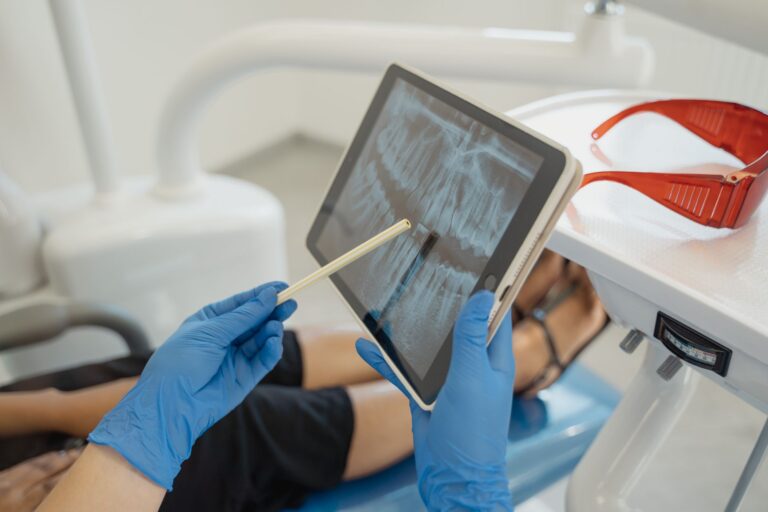
- Radiographic assessment of bone loss, typically using periapical or bitewing radiographs, with consideration of cone-beam computed tomography (CBCT) in complex cases;
- Diagnosis and staging according to established classification systems, such as the 2017 World Workshop on the Classification of Periodontal and Peri-Implant Diseases and Conditions.
The BPE is a screening tool, not a diagnostic tool. It uses a WHO probe to record the highest score in each sextant of the mouth, ranging from 0 to 4, with an asterisk indicating furcation involvement. Scores of 3 or 4 suggest the need for a full periodontal assessment, including detailed charting and radiographs. The BPE does not provide information on disease activity, progression or the specific sites requiring treatment.
The General Dental Council (GDC) Standards for the Dental Team state that dental professionals must keep accurate and contemporaneous records. In periodontal disease claims, the absence or inadequacy of BPE recordings, full periodontal charting or radiographic assessment may support allegations of breach of duty. However, the question is whether the failure to record or assess fell below the standard of a reasonably competent dentist, not merely whether a record is absent.
Legal relevance: breach of duty and supervised neglect
Allegations of breach of duty in periodontal disease claims often involve:
- Failure to perform or record BPE at appropriate intervals;
- Failure to act on BPE scores of 3 or 4 by conducting a full periodontal assessment;
- Failure to take or interpret radiographs to assess bone loss;
- Failure to diagnose periodontal disease at an early stage;
- Failure to provide appropriate treatment or referral to a specialist;
- Failure to monitor disease progression, which may lead to allegations of supervised neglect.
Supervised neglect describes a situation where a patient’s periodontal disease is monitored over time without appropriate intervention, leading to avoidable progression and potential tooth loss. In medico-legal terms, supervised neglect may constitute a breach of duty where a dentist fails to act on clear signs of disease progression, such as increasing pocket depths, bleeding on probing or radiographic evidence of bone loss. It requires evidence that the disease progressed due to a failure to provide appropriate care, rather than merely the presence of periodontal disease.
The legal test for breach of duty is established by Bolam v Friern Hospital Management Committee [1957] and refined by Bolitho v City and Hackney Health Authority [1998]. The court will consider whether the dentist’s actions were supported by a responsible body of dental opinion. Expert evidence is essential to determine whether the standard of care fell below that of a reasonably competent dentist, taking into account the clinical context and available records.
Causation: the challenge of pre-existing disease
Causation in periodontal disease claims can be contentious, particularly where the claimant had pre-existing disease. The primary legal test for causation is the “but-for” test: would the harm have occurred but for the defendant’s breach of duty? In cases involving chronic conditions such as periodontal disease, applying this test can be complex.
Key considerations in establishing causation include:
- The natural history of periodontal disease, including its progression in the absence of treatment;
- The claimant’s oral hygiene and compliance with treatment recommendations;
- The presence of confounding factors, such as smoking or diabetes, which may accelerate disease progression;
- The timing and adequacy of interventions, such as scaling and root surface debridement, periodontal surgery or extractions;
- The prognosis of affected teeth at the time of the alleged breach, including the likelihood of tooth retention with appropriate treatment.
Where periodontal disease was present but unmonitored or untreated, expert evidence must address whether earlier intervention would have altered the outcome. For example, if a tooth was lost due to advanced periodontal disease, the expert must assess whether appropriate treatment at an earlier stage would have preserved the tooth or whether the tooth was already of hopeless prognosis. This assessment requires analysis of clinical records, radiographs and the claimant’s oral hygiene history.
The concept of material contribution, as introduced in Bailey v Ministry of Defence [2008], may be relevant where multiple factors contribute to harm. However, in periodontal disease claims, the question typically remains whether the defendant’s breach materially affected the outcome, rather than whether it was one of several contributing factors.
Common evidential pitfalls in periodontal disease claims
1. Over-reliance on BPE recordings
BPE is a screening tool, not a diagnostic tool. A common pitfall is to treat BPE scores as definitive evidence of periodontal disease or its progression. For example, a BPE score of 3 in a sextant indicates the need for a full periodontal assessment but does not, in itself, diagnose periodontal disease or determine its severity. Expert witnesses must clarify the limitations of BPE and the need for further assessment where scores of 3 or 4 are recorded.
2. Misinterpretation of radiographs
Radiographs are essential for assessing bone loss in periodontal disease, but their interpretation requires clinical correlation. A common error is to attribute bone loss to negligence without considering the natural history of the disease or the limitations of two-dimensional imaging. Expert witnesses must assess radiographs in the context of the clinical findings and the claimant’s overall periodontal status.
3. Failure to distinguish between screening and diagnosis
Screening tools such as BPE are not diagnostic. A failure to perform BPE at appropriate intervals may support an allegation of breach of duty, but it does not, in itself, establish that periodontal disease was present or would have been diagnosed earlier. Expert evidence must address whether the absence of BPE recordings deprived the claimant of the opportunity for earlier diagnosis and treatment.
4. Prognosis uncertainty
Expert witnesses must avoid overstating the prognosis of teeth affected by periodontal disease. The prognosis depends on multiple factors, including the severity of bone loss, the claimant’s oral hygiene and their response to treatment. Where the prognosis is uncertain, experts should qualify their opinions accordingly, avoiding definitive statements about the likely outcome of earlier intervention.
5. Consent evidence gaps
Informed consent is a key issue in periodontal disease claims, particularly where treatment options such as extractions or periodontal surgery are involved. The case of Montgomery v Lanarkshire Health Board [2015] established that patients must be informed of material risks and reasonable alternatives. Expert witnesses must assess whether the claimant was adequately informed of the risks of treatment, the risks of non-treatment and the available alternatives.
Role of the expert witness: discipline and scope
Periodontal disease claims require expert evidence from a dentist with substantial experience in periodontology. The expert must be able to address:
- The standard of care expected of a reasonably competent general dental practitioner in performing BPE, full periodontal charting and radiographic assessment;
- The appropriateness of treatment provided, including scaling and root surface debridement, periodontal surgery and extractions;
- The timing and adequacy of referrals to a specialist in periodontology;
- The causation of tooth loss, including whether earlier intervention would have altered the outcome;
- The prognosis of affected teeth, taking into account the claimant’s oral hygiene and response to treatment.
Civil Procedure Rules (CPR) Part 35 restricts expert evidence to what is reasonably required to resolve the proceedings. In periodontal disease claims, this may involve a single joint expert under CPR 35.7 or separately instructed experts. The expert’s overriding duty is to the court under CPR 35.3, and their report must comply with CPR 35.10, including a statement of truth and a declaration of understanding of their duty to the court. Where appropriate, the court may direct discussions between experts under CPR 35.12 to identify areas of agreement and disagreement.
Practical guidance for solicitors
Instructing solicitors should consider the following when preparing periodontal disease claims:
Records to obtain
- Complete dental records, including BPE recordings, full periodontal charting and radiographs;
- Referral letters to specialists, if applicable;
- Consent forms and records of discussions about treatment options;
- Records of oral hygiene instruction and the claimant’s compliance with recommendations;
- Records of any smoking cessation advice or diabetes management, where relevant.
Questions to pose to the expert witness
- Did the defendant’s failure to perform or record BPE at appropriate intervals fall below the standard of a reasonably competent dentist?
- If BPE scores of 3 or 4 were recorded, was a full periodontal assessment conducted in a timely manner?
- Were radiographs taken and interpreted appropriately to assess bone loss?
- Was the claimant’s periodontal disease diagnosed and staged correctly?
- Was the treatment provided, including scaling and root surface debridement, periodontal surgery or extractions, appropriate and timely?
- Would earlier intervention have altered the outcome, or was the prognosis of the affected teeth already hopeless?
- Was the claimant adequately informed of the risks of treatment, the risks of non-treatment and the available alternatives?
- Did the defendant’s actions materially contribute to the claimant’s harm, or was the harm inevitable due to pre-existing disease?
Discipline selection
Periodontal disease claims require expert evidence from a dentist with substantial experience in periodontology. The expert should be familiar with current diagnostic criteria, treatment guidelines and the legal standards for breach of duty and causation. Where the claim involves complex periodontal surgery or referral decisions, a specialist in periodontology may be required.
Conclusion
Periodontal disease claims present evidential challenges, particularly in relation to BPE recording, supervised neglect and causation. The interplay between clinical records, diagnostic thresholds and legal standards requires careful analysis by both instructing solicitors and expert witnesses. By focusing on the specific clinical and legal issues at hand and selecting the appropriate expert discipline, solicitors can ensure that the court receives clear, relevant and independent expert evidence.
This article is for general informational purposes only and does not constitute legal or medical advice. Readers should seek appropriate professional guidance.