Report type
Condition and prognosis reports
The claimant’s present dentition, how it is likely to change and the cost of appropriate treatment across their lifetime.
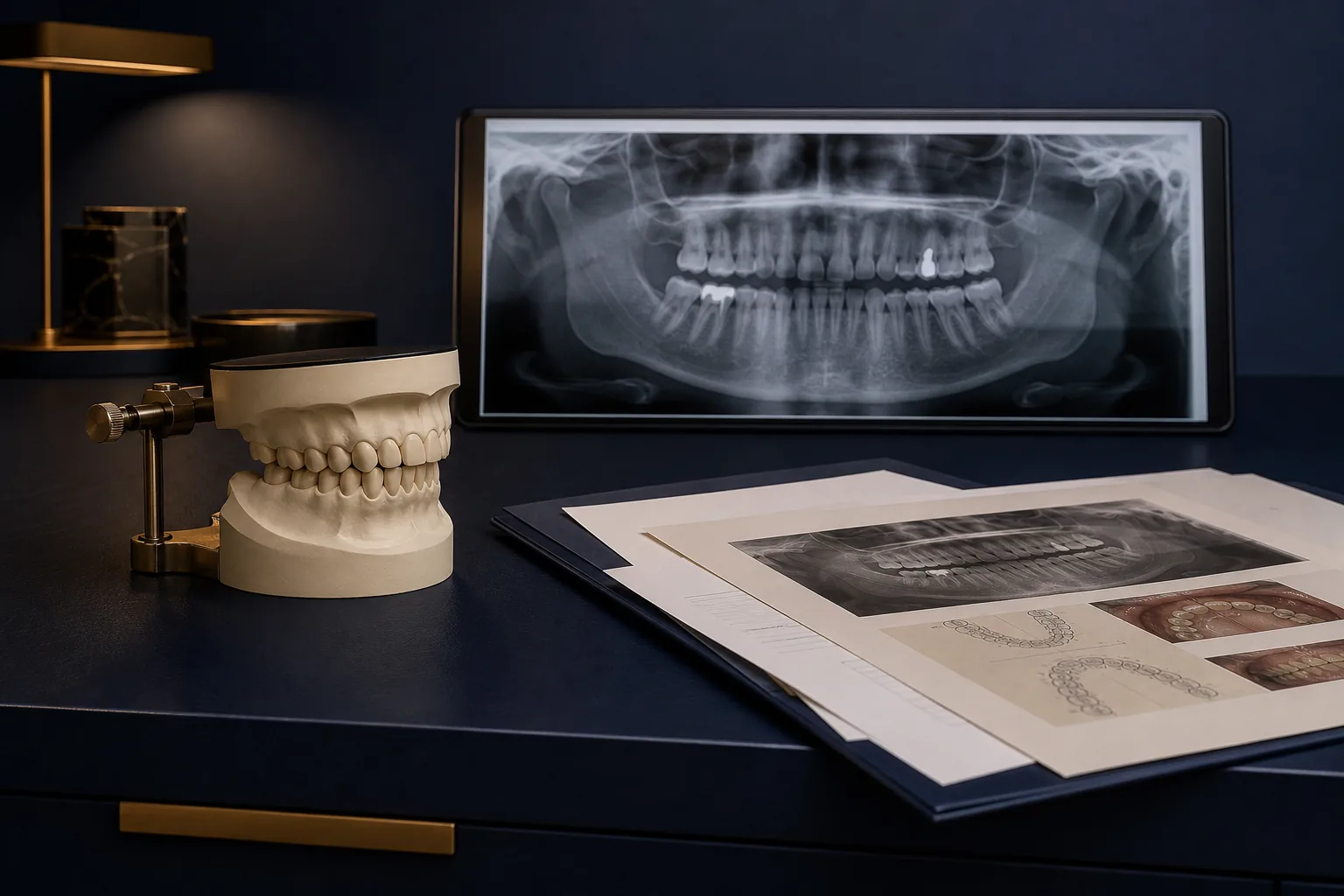
Purpose and limits
What this report does
A condition and prognosis report answers three questions: what damage exists, what will happen to it, and what treatment will be required.
It does not address breach of duty or decide whether anyone was negligent. Where liability is in issue, a breach and causation report is scoped separately.
View breach and causation reports →In dental claims this is usually the report that determines value. Liability may be conceded or established elsewhere; the schedule depends on what the dentition is likely to require across the claimant’s lifetime.
Practice Direction 35
What makes the report compliant
The form and content of civil expert evidence are substantive requirements, not finishing details.
Range of professional opinion
Where a range of opinion exists, the expert must summarise that range and explain the reasons for their own view.
Qualified opinion
Where an opinion cannot be given without qualification, the qualification must be stated rather than smoothed over.
Instruction context
When this report is used
- 01
Personal injury
After trauma to the teeth, jaw or face, where liability sits elsewhere and the value is in the dentition.
- 02
Dental negligence, after liability
Where breach and causation are established or admitted and the claim turns on consequences.
- 03
CICA applications
Awards are tariff-based, so the report must establish which tariff description the injury meets rather than cost a lifetime of treatment.
- 04
Single joint instruction
Where both parties require one independent view of the claimant’s clinical position.
The hard part
Condition is examined. Prognosis is judged.
A tooth can look sound at examination and fail later. Each restoration also has a finite life of its own.
The report must therefore explain what is likely to happen and cost the treatment that follows across the claimant’s expected lifetime. A description of the mouth today does not answer the question instructed.
Clinical evidence
The examination and its limits
A condition and prognosis report usually requires the claimant to be examined. A records review can establish what was done and when; it cannot establish the current clinical picture, tooth mobility or the state of supporting bone.
Where examination is not possible, the report states what could not be determined. It does not fill the gap with assumptions.
For instructing solicitors
Why solicitors instruct us
Evidence prepared for Part 35 questions
Ranges of opinion and necessary qualifications are stated in the report rather than left to emerge under challenge.
The right discipline for the issue
Dentition prognosis may require restorative expertise; facial skeleton prognosis may require surgical expertise. Some claims require both.
A named case manager
One consistent point of contact from the first enquiry through to delivery of the report.
Deferred terms for CFA-funded cases
For cases funded under a conditional fee agreement, payment can be deferred to the conclusion of the claim where agreed in writing.
Frequently asked questions
Before you instruct
An independent expert report setting out the claimant’s current clinical position, what is likely to happen to it, and the treatment that will be needed.
No. That is addressed by a breach and causation report. The two are scoped and quoted separately.
Usually. A records review cannot establish the current clinical picture.
Not usually without adaptation. CICA awards are tariff-based and the report needs to address the tariff rather than a lifetime treatment schedule.
Practice Direction 35 requires the qualification to be stated. The report should not express greater certainty than the evidence supports.
Discuss an instruction
Need a condition and prognosis report?
Tell us the injury and a case manager will send a suitable CV and a fixed quote.