Condition
Crown and bridge failure expert reports
Independent opinion on preparation, fit, and what the restoration did to the tooth beneath it.
Breach of duty
The standard the dentist is judged against
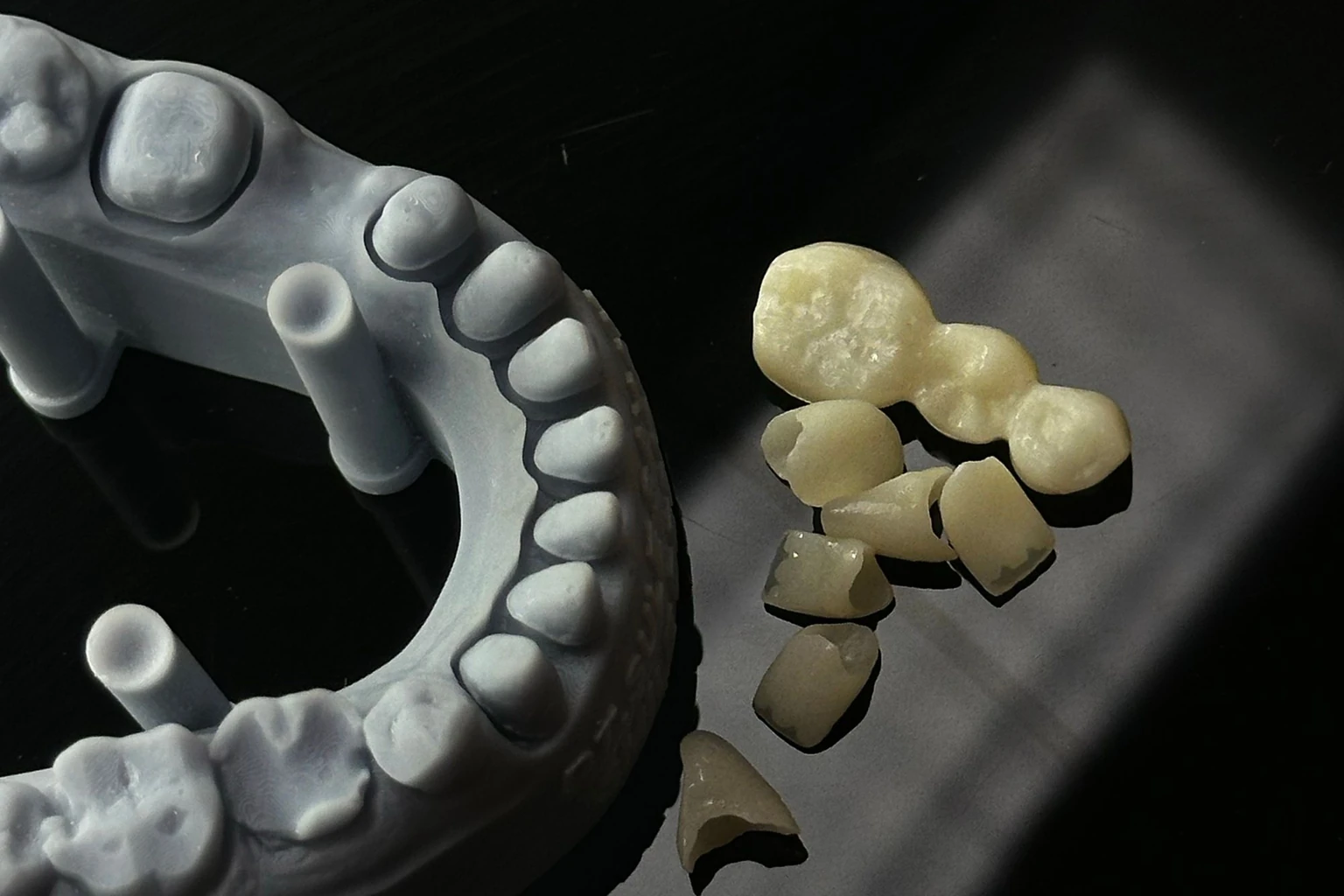
A crown protects a tooth and also damages it. Preparation removes tooth structure and risks the pulp. Competent treatment accepts that trade-off knowingly; negligent treatment does not.
The expert asks whether the tooth was a suitable candidate, whether the preparation and margins met the standard of a reasonably competent practitioner, and whether the restoration was placed on a tooth that was healthy enough to receive it.
Clinical evidence
How the failure happens
Crowns placed over decay
Caries not removed before the restoration was cemented.
Poor margins
An overhang or a deficient margin that traps plaque and destroys the tooth beneath.
Excessive preparation
Pulp exposure, or a tooth reduced beyond what the restoration required.
Bridges on unsuitable abutments
Compromised teeth loaded to carry a span they cannot support.
No diagnosis of pulpal status
Vitality never tested before the tooth was crowned.
Repeated recementation
A failing restoration recemented rather than investigated.
The counterfactual
Causation, and where the claim fails
Restorations fail with age. The defendant will say the tooth had reached the end of its life. The expert must date the failure and attribute it.
A crown that fails after fifteen years has performed as expected. One that fails within two, with radiographic caries under the margin, is a different matter. Where the tooth is lost, the question is whether competent treatment would have kept it, and for how long.
Damages run to the replacement of the tooth and to the restorations that will follow across the claimant’s lifetime.
-
01
When did the restoration fail?
Dated from the radiographs, not from the claimant’s account of when trouble started.
-
02
Was the tooth suitable, and the fit to standard?
Whether the preparation, the margins and the abutment choice met the standard.
-
03
Would competent care have kept the tooth?
And for how long — the measure of the loss.
Discipline-led matching
The expert we match
Restorative dentist or prosthodontist
On the suitability of the tooth, the preparation, the margins and the fit of the crown or bridge.
Endodontist
Where the tooth was subsequently root-treated or lost, an endodontist may be needed on causation.
Where the instruction crosses those boundaries, we identify the required disciplines before you instruct and provide the proposed CV.
Expert evidence
The report you receive
Why solicitors instruct us
Date the failure, and value the tooth beneath.
-
01
Age of the restoration decides the claim
We match an expert who will date the failure from the radiographs rather than accept the claimant’s account of when trouble started.
-
02
The tooth beneath is the real loss
A remade crown costs little. A tooth lost to a defective margin costs a lifetime of prosthetics.
-
03
Keep one case-management contact
A named case manager coordinates the instruction, the proposed CV and the agreed report scope, and tells you where it stands before you ask.
Frequently asked questions
Assessing a crown or bridge claim.
Practical questions for solicitors reviewing a restorative instruction.
There is no guaranteed lifespan. Early failure with an identifiable cause is what founds a claim.
Not necessarily. Recementation is routine. Repeated failure without investigation is the concern.
That may be a consequence of preparation, or of the pre-existing condition. The expert distinguishes the two.
The clinical records and all radiographs, particularly any taken before the restoration was placed.
Discuss an instruction