Case type
Dental and facial injury expert reports.
Prognosis and the lifetime cost of dental care, for personal injury solicitors acting after trauma.
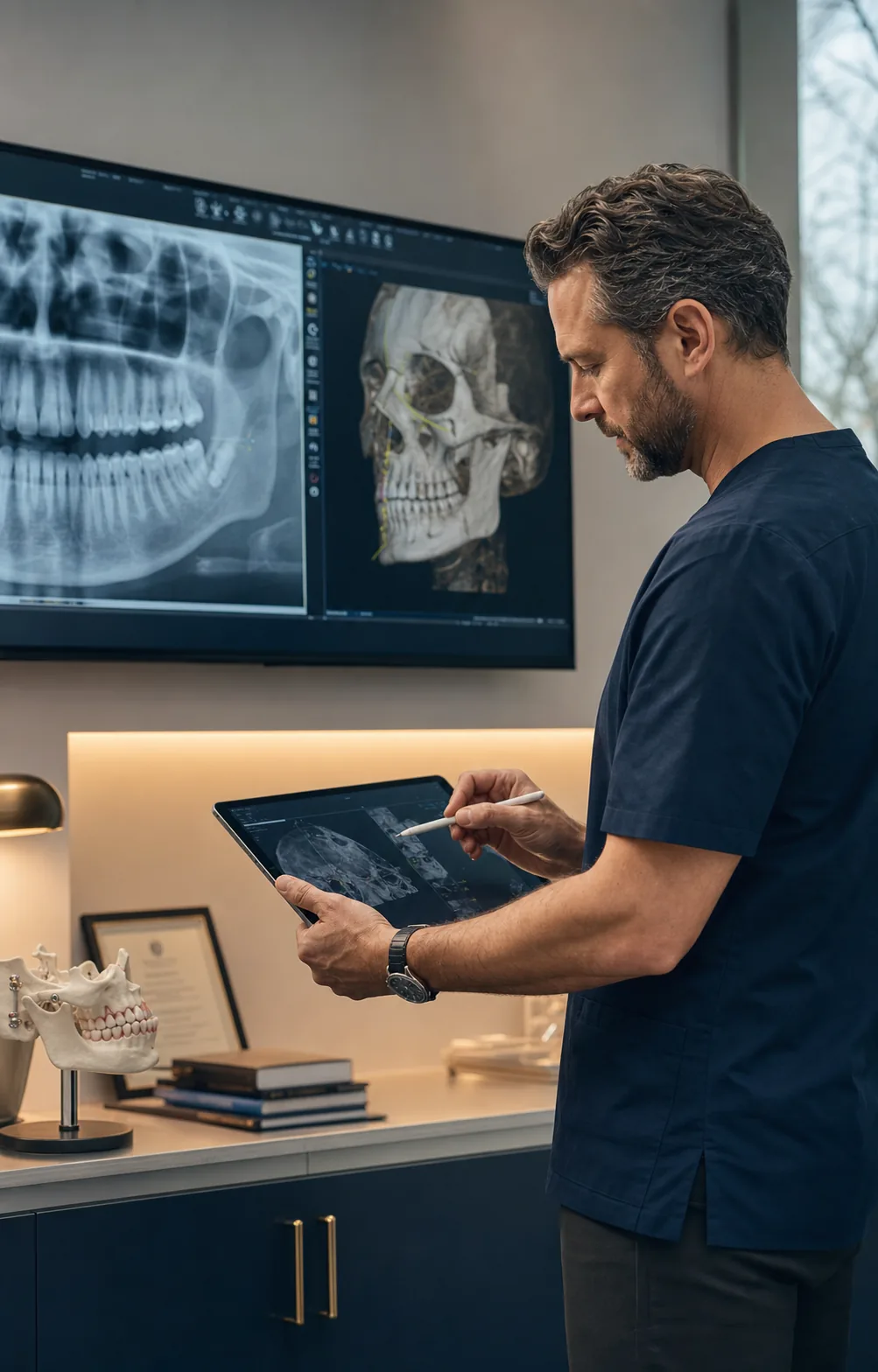
Where the expert fits
The claim cannot be valued properly without a defensible dental prognosis.
Liability may be addressed elsewhere. The dental expert defines the clinical consequences of the trauma and the future care attributable to it.
For solicitors assessing dental injury compensation, the report can address each affected tooth, its likely outcome and the treatment or replacement cycle that follows. General damages remain a matter for the legal team, applying the relevant Judicial College Guidelines rather than asking the expert to value pain, suffering and loss of amenity.
Injuries we report on
Dental and maxillofacial consequences of trauma.
Avulsed teeth
Teeth knocked out completely, whether or not they were re-implanted after the incident.
Fractured and displaced teeth
Crown and root fractures, luxation injuries and their longer-term restorative consequences.
Jaw fracture and TMJ injury
Injury to the mandible, maxilla or temporomandibular joint requiring dental or surgical opinion.
Facial soft-tissue injury
Laceration and scarring where dental or oral and maxillofacial expertise is relevant.
Loss of dentition
Cases in which prosthetic treatment, maintenance and replacement may extend across a lifetime.
How claims arise
Different mechanisms. A case-specific clinical question.
Road traffic collisions, assaults, workplace accidents, sporting injuries and falls can all require dental expert evidence. Where facial injury compensation is also in issue, maxillofacial evidence may be required. The mechanism informs causation, particularly where an existing condition may have made the dentition more vulnerable.
Assault cases and CICA applications may also require a dental report, but they operate within different frameworks. A civil claim may focus on attributable future care; a CICA application requires evidence relevant to the applicable tariff description.
The expert we match
Expertise matched to the structures and evidence in issue.
Restorative dentistry
For the dentition, restorative prognosis, prosthetic options and the future replacement cycle.
Oral and maxillofacial surgery
Where the facial skeleton, jaw fracture, soft tissues or temporomandibular joint is involved.
The report you receive
A clear CPR Part 35-compliant opinion, scoped to the instruction.
Why solicitors instruct us
Evidence built around the issues that affect the claim.
The schedule supports valuation
We match an expert able to address probable treatment and replacement across the claimant’s expected lifetime, not only the immediate intervention.
The baseline supports causation
Earlier records are examined so the opinion can address the relationship between trauma, vulnerability and pre-existing need.
A named case manager
One point of contact coordinates the instruction from first enquiry through to delivery of the report.
FAQs
Commonly asked questions
The expert identifies probable treatment and replacement intervals across the claimant’s expected lifetime and provides the requested costs, allowing for restorations that may fail and require replacement.
No. Pain, suffering and loss of amenity are assessed by the legal team under the relevant Judicial College Guidelines. The expert supplies evidence on condition, prognosis and the attributable cost of future care.
It depends on the questions in the instruction. An examination is commonly required for a current condition and prognosis opinion, while a records review may answer narrower documentary questions.
It can. The scope differs from a civil future-care assessment because a CICA application requires evidence relevant to the scheme’s tariff descriptions.
Initial survival does not determine the long-term prognosis. The report can address the risk of later resorption, failure and eventual loss on the available clinical evidence.
Discuss an instruction